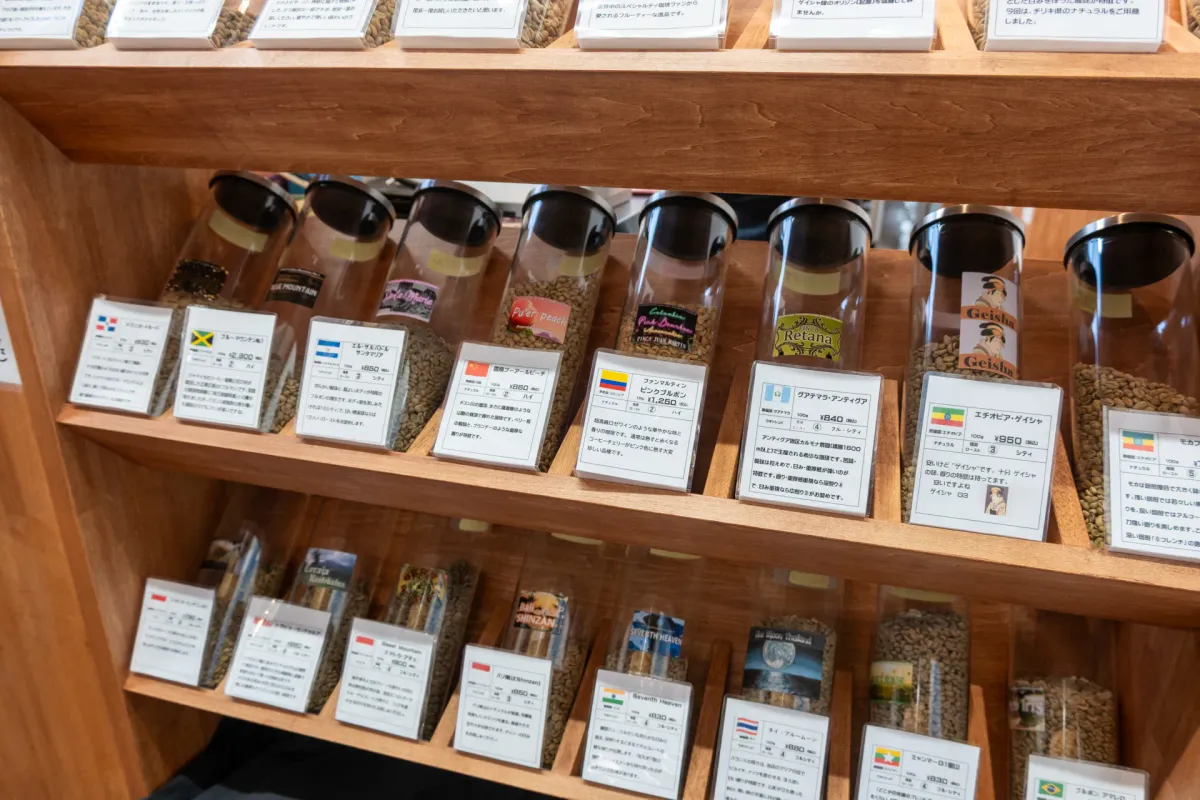
As we were wandering around the streets of Matsue city (after visiting its castle and taking some bird photos) we happened across a coffee roastery called the Matsue Roasting Place (松江焙煎所).
I was keen to drink some good coffee while I was in Shimane, but my husband (who grew up here) told me not to expect too much. Even though Matsue is Shimane’s capital city, Shimane is the second-smallest of Japan’s 47 prefectures by population, so it’s still a pretty sleepy place when compared to the likes of Tokyo. So we were pleasantly surprised to stumble across this shop. They had quite a variety of beans, with all being roasted on the spot after you order.
Browsing the options, one caught my eye - the infamous Kopi Luwak.

If you haven’t heard of it, it’s the one where you get civets to eat and partially digest the coffee beans and then poo them out. I’d never seen that being sold in Japan before, but the price was an eye-watering 6,000 yen per 100g. As you would expect, animal welfare can be a concern with this bean but it seems like this one is the “wild” variety which means they harvest the beans from the poop of wild civets rather than force-feeding civets in cages.
I had to ask the owner - does it actually taste that good? Of course he’s not about to say no, but he seemed quite enthusiastic in answering how it’s like no other bean he’s ever tasted, and let us take a whiff of the beans. If you’re curious… you can buy one cup for 2,000 yen.
We decided to go for the more reasonably priced Pu’er Peach from Yunnan, China (860 yen per 100g). We tried some beans from Yunnan previously from Honey Beans and weren’t too impressed, so weren’t sure about this one, but the cool name lured me in.

The owner was quite a friendly guy, and I thought it was a pity that I wouldn’t be able to make a repeat visit - but they do have a website for online orders so I might have to try another bean sometime.
As for how the beans actually tasted - I’d give it a review of “alright / not bad”. The owner recommended that the best time to drink it is 3 - 4 days after roasting, but I’ve heard conflicting opinions on that one? We ended up having to wait 10 days until we got home from Shimane to try it out.
It was a bit acidic/sour-tasting, although the owner asked us as we were purchasing it “you are okay with a sourer taste right?” so that’s to be expected. The label mentions it’s made with “anaerobic fermentation”, which Google tells me produces beans with “vibrant acidity”.
Actually, my husband and I are finding we are starting to like the acidity a bit more - when we first started doing pour overs we didn’t like it at all, but I find it’s starting to grow on us.

If you’re looking for the roastery, the Matsue Roasting Place is located inside the Karakoro Plaza, which is a small area of shops next to an old preserved bank building.

Leave a comment