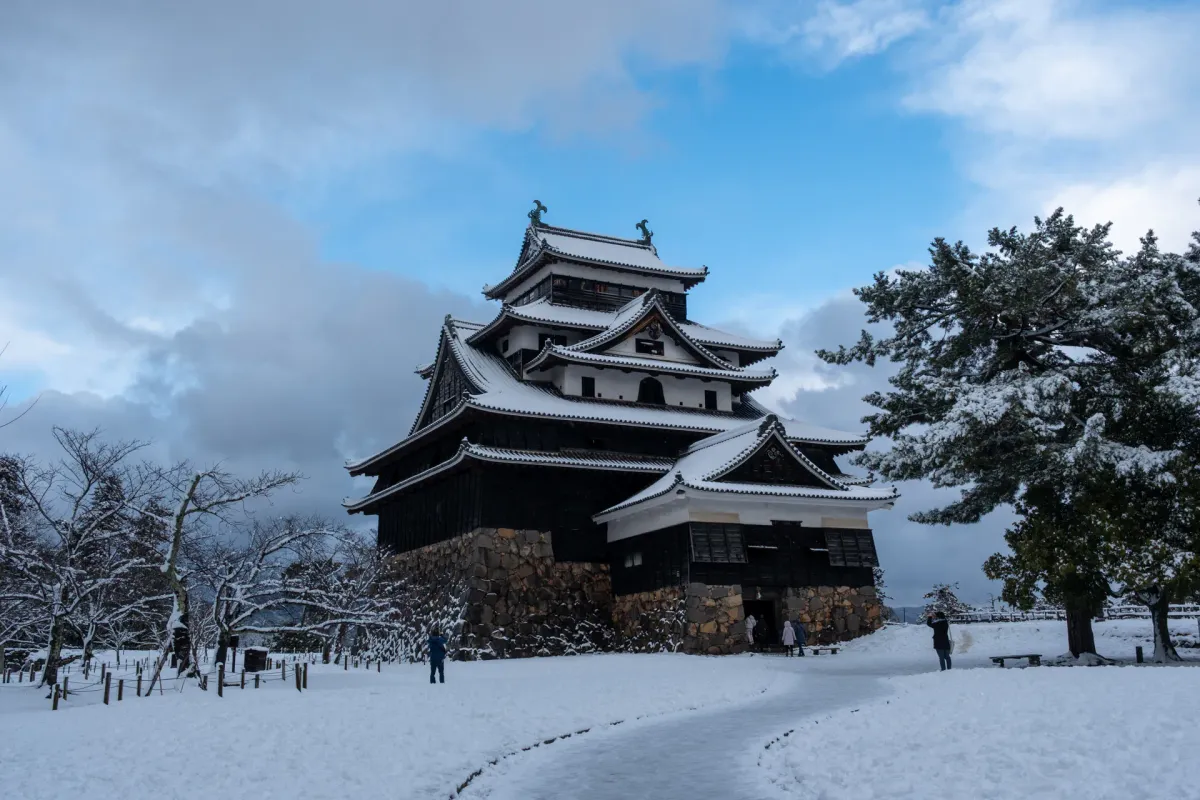
Over the past week, I’ve been spamming you all with a lot of little notes about my time in Shimane. I’m not usually much of a travel blogger (outside of hiking) but I recently added a map section to my blog and that’s incentivised me to try posting a little bit more about the places I’ve been to. I also think Shimane and Tottori are still pretty underrated among Japan’s 47 prefectures, so I hope me putting this on the internet might prompt a couple more people to visit.
This was my second visit to Shimane and my first time visiting in winter, although it only began snowing partway through our trip. I’ve visited places with snow, but never lived in one, so it was quite a novel experience to wake up to the scenery suddenly looking so white everywhere (not to mention, you can hear the chunks of snow sliding off the roof throughout the day).

My in-laws’ house backs onto a small river which is inhabited by a number of bird species and an invasive species of beaver/rat known as a nutria (or “nutoria” in Japanese). The idea of being able to sight one of these quite tickled my fancy since they look rather cute and the Japanese name makes it sound like some sort of nutritious energy bar. My in-laws, on the other hand, shudder in revulsion at the thought of them and consider them to be more like rats rather than beavers. Unfortunately I wasn’t able to spot one on this visit. (Next time!)
On Lafcadio Hearn
The other thing that stands out to me about Shimane and Matsue (well, maybe other than its castle) is that they seem to be very proud of one of their residents in particular - a man by the name of Lafcadio Hearn. A Greek/Irish writer who moved to Matsue in 1890, he worked as an English teacher while publishing books introducing Japanese culture to the West.
He only lived in Shimane a short 15 months before moving on to Kumamoto and then Tokyo, but his time there must have had some impact on him, as when he gained Japanese citizenship he took the name Yakumo (八雲) from the Izumo Province where Shimane is located. Not to mention, he met and married his wife Setsuko in Shimane as well.
As a fellow foreigner living in Japan, I’m a little bemused by his popularity, but I also find it rather interesting - you might expect in Japan to see the birthplace of “this famous samurai so-and-so” pointed out, but it’s not often that a foreigner would be so celebrated. I think part of appeal also might be the romance element, since he married the wife of a local samurai family.

Ironically while Hearn first gained some fame in the West for writing about Japan and sharing it with the world - his writings were then translated into Japanese, and it seems Japan is where most of his popularity now actually lies. At least as a Westerner myself, I had never heard of him. I suppose although his works may have been influential at the time they were published, they don’t seem to have stood the test of time.
It does seem though that some efforts have been made to increase his profile via exhibits in his hometown of Dublin, plus in New Orleans where he spent 10 years before moving to Japan. I also discovered while writing this post that one of his books on Japanese ghost stories, Kwaidan, was made into a movie in 1965 and won an award at the Cannes Film Festival, plus a nomination at the Oscars. So I suppose he must have some fans from the movie world as well.
Overall he does seem like quite an interesting guy, and I might have to give reading one of his books a go sometime.

As another example of his popularity, when we passed the Jozan Inari shrine, there were signs explaining that he passed this shrine on the way to teach at his school, and a sign pointing out exactly which of the fox statues there were his favourite.

There’s also the Lafcadio Hearn Memorial Museum, and next door is the house where he lived for 5 months in 1891.
And most notably of all, Japan’s main public broadcaster (the NHK) is currently airing a TV series called Bakebake, based on the story of Setsuko, Hearn’s wife. This seemed to be quite a Big Deal for Shimane, and there were posters absolutely everywhere promoting the show. I assume anything I would try to link to you from YouTube would be region-blocked, but if were curious here is one of the preview videos from its Instagram channel.
When we passed by Karakoro Plaza on the way to get some coffee beans, the basement of the building was also holding a small exhibition of some of the clothing items and props that were used in the show.

As a final note, if you were ever considering a visit to Shimane, I would also definitely recommend visiting the Izumo-taisha Shrine. It’s the oldest Shinto shrine in Japan, and the most famous landmark in Shimane. I had already visited it last time I came to Shimane, so this time I gave it a miss, but it’s well worth the visit.
Comments
Leave a comment