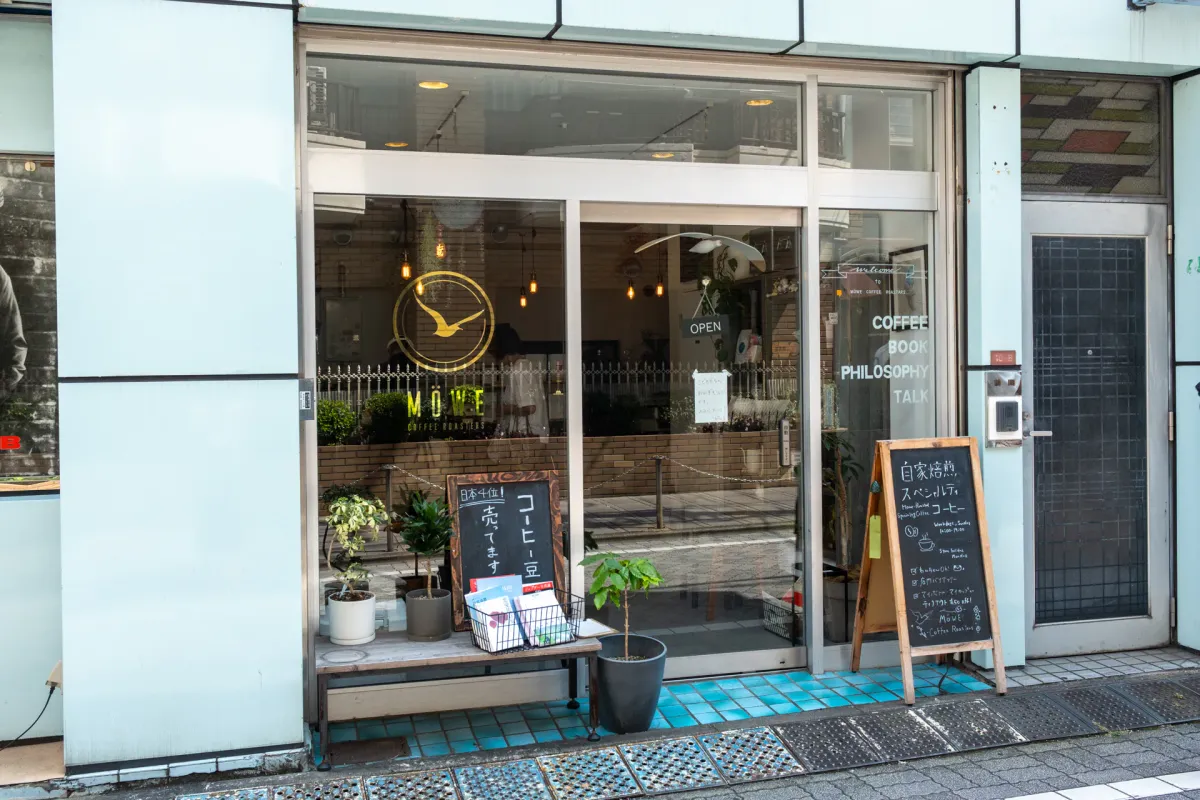
MÖWE COFFEE ROASTERS is a small coffee store and cafe in Koenji. Once inside the store, you can grab a seat and take a look at the menu - the barista will come over and take your order when you are ready.
Rather intimidatingly, the front cover of the menu had a rather long series of instructions.

To translate and summarise - it mentions that MÖWE is mainly a roaster, and not a cafe. You are limited to 1 hour per drink, and to only talk in quiet voices. Standing up to take photos and taking phone calls are forbidden. Refrain from wearing strong perfumes as it will hinder the ability of other customers around you from enjoying the fragrance of the coffee. No laptops on weekends, or on busy weekdays. Do not refer to employees with gendered phrases, sexually harass them, or engage in any sort of gender discrimination.

Maybe lending to that “this is not a cafe” proclamation, the seating is a little haphazard - there were a couple of stools scattered about, plus one comfy couch-type chair which I sat down on (and then realised it was labelled as “priority seating” which I felt a bit bad about, but luckily the store remained pretty empty for my visit). I realised later on there is also some counter seating at the back, which is probably your best bet.

Flicking through the menu, you can choose from a number of light to medium roast beans, all in the range of 900 - 1100 yen for a cup (Ethiopia, Papua New Guinea, Peru, Tanzania). They had 1 decaf bean as well. If you want it iced, it’s an extra 50 yen.

I decided to get the light roast Ethiopia Gesha as it was the only non-washed bean on the menu (using carbonic maceration). I think I’m realising I have a preference for more fermented beans generally.
The drink was quite fruity! I really liked it, so it turned out to be the perfect choice for me.
Tucked in the back corner of the menu was also a zine from Coffeers for Equality, which covered gender equality issues in Japan’s coffee scene.

It explains that what kickstarted this group was that in a 2024 edition of BRUTUS magazine’s “Guidebook on delicious coffee” they listed 8 “key persons” in Japan’s coffee industry, all of which were men. (This also sparked a lot of conversation on X). Having visited quite a few cafes and roasters in Japan at this point, I’m really not surprised - coffee is quite a male-dominated industry here, unfortunately.
The zine featured a bunch of short essays from various people in the coffee industry. The long list of rules on the front page of the menu had mention of not using gendered phrases or sexually harassing employees, which I had initially thought was a little bit of an odd thing to need to include, but one of the essays in the zine covered a case where a barista had been questioned on their gender, and how 70% of female baristas have experienced sexual discrimination, so given that context it makes sense.

If you wanted, there was a shelf in the corner where you could pick up a zine to take home (for a small donation preferred). I had recently picked up a book from Kuramae’s Tomei Bookstore called “Is Coffee For Men?” and to my amusement that exact same book was being sold here. I’ll need to get around to reading it.

Having more women and LGBT-friendly coffee shops in Japan is rather a cause I can get behind, so of course I decided to get a bag of their beans (a no-brainer anyway, since it tasted so good). If you were curious, the zine had two other coffee shops listed as their members:
- 大山崎 (Oyamazaki) COFFEE ROASTERS
- Circus Coffee (サーカスコーヒー)
Unfortunately they are both down in Kyoto, though!

MÖWE’s beans were priced between 1600 to 2500 yen for 100g, and were the same selection of the ones you could choose to drink from. Since I enjoyed the cup so much, I decided to get the same Ethiopia bean (2200 yen). They were doing a 20% discount on the beans for some reason, so I got it for 1760 yen.
MÖWE COFFEE ROASTERS’ beans: the verdict

The packaging is sealed, and comes with a roast date labelled on the back.

Quite oddly there is also a translated extract from TS Eliot’s The Still Point of the Turning World taped over it. It seems each bean had a different poem assigned to it as well.

Anyway, I first opened up the beans about 2 weeks after roast date - which may have been a little early (I have seen other roasters recommend waiting 20 days). I couldn’t quite get to taste as tasty as I had it in the store, which maybe is a skill issue on my part and shows the barista’s skill (and why it’s worth that 1100 yen).
My go-to recipe for pourovers at the moment is:
- 13g beans/200g water
- 15 clicks on my Timemore C2 grinder
- and using Leaves’ pourover method (one circular pour, then a central pour).
This does mean that the coffee can drain a bit faster then doing multiple circular pours - and I found it drained in 1:35, and tasted overly sour and possibly under-extracted. I tried 12 clicks (a finer grind), which was not the right move as that made it taste worse. So then I switched to doing multiple pours like James Hoffman’s V60 technique and I think this was the way to go, and it drained in just on 2:00 and tasted a bit better.
I neglected to play around with the temperatures, as all the Japanese roasters I’ve seen so far only tend to recommend maximum temps of 92℃ for light roasts. But on the final day of drinking this bean, I did try 96℃ and I think this was again marginally better, but really too hard to say!
It’s also a bit of an unfair comparison as I tend to drink hot pourover at home while I tried it iced in-store, so maybe that affected the results as well.
In saying all of this, I know I tend to like picking weirder beans in stores, but then struggle at home to get a cup that actually tastes delicious. I’m not sure if that quite makes for a good review on my blog - it’s probably my fault if it doesn’t taste good, not the beans! But I find that doing all of that fiddling and testing different combos is part of the fun for me.
In the case of MÖWE, I might have to give myself the homework of going back for a second visit to see if the barista will share their secrets.

Hi, I'm Emma!
I'm a long-time lover of coffee - back in Sydney my go-to drink was always a soy cappucino. After I moved to Tokyo 4 years ago, I discovered the wonders of pour-over coffee and now I'm always on the lookout for new coffee beans to try. So far I've checked out 31 coffee shops and roasters here in Japan.
If you found this post useful, you can also show your support by buying me a coffee ☕
Leave a comment