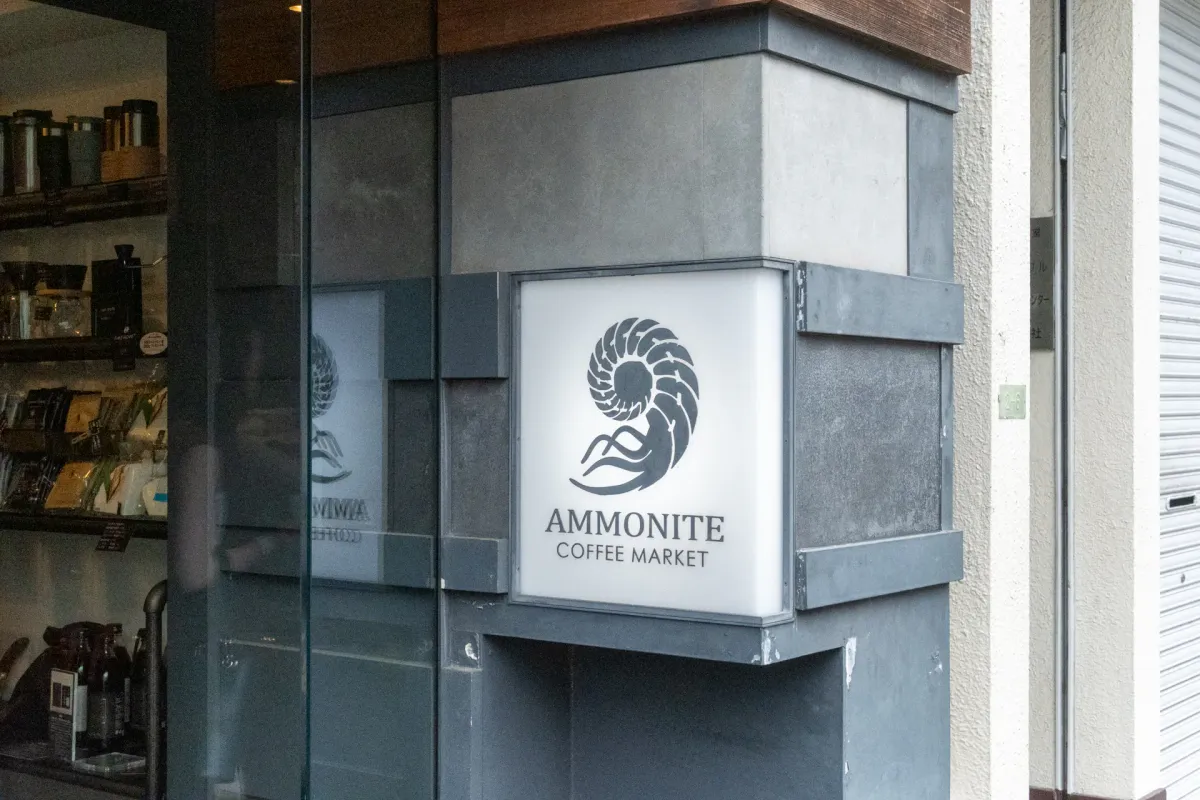
Ammonite Coffee is a roaster and cafe that sits a short walk away from the University of Tokyo campus in Hongo. Maybe it’s because of the location, but it had probably the most reasonable price I have ever seen in Tokyo for a decent cup of pourover coffee - only 600 yen.

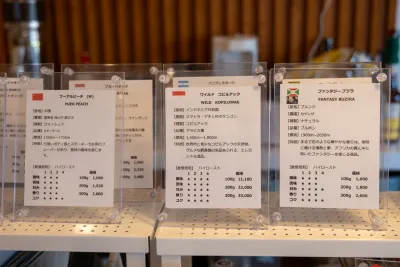
They had a number of single origin beans you could choose from - Kenya, Costa Rica and others - as well as a couple of their own blends as well. Regardless of the price, they were all only 600 yen for a cup. All the beans are both buyable / drinkable.


They also had samples out for a couple of their blends, if you weren’t exactly sure what to pick.

If you wanted to pay a little bit more - 980 yen - you could get a cup of their Colombia Gesha bean.

They were selling 100g of this for 5990 yen so a cup of it for 980 yen (which tends to use 13 - 15g of bean) still feels like a very reasonable price. For reference, I’ve been to other places where they will charge you 1000 - 1300 yen a cup for a bean that costs 2000 - 3000 yen for a 100g bag.
This makes me think that I should be tracking “cup to bean price ratio” on this blog (food for thought).

Of course we decided to get the Colombia Gesha, as well as their Ethiopia Yirgachaffe.

We spent quite a while pondering our choices so the barista was nice enough to let us take a whiff of the beans as well.
Along with our coffee we also got a slice of their quiche (430 yen) which was pretty tasty and I would recommend.

The Ethiopia Yirgachaffe we drank was actually the same bean that we had about a month prior at armadillo, and was what prompted us to check out this place. Lately I’m realising I quite like Yirgachaffe beans, it has a sweet scent. Taste-wise the Colombia Gesha did taste better and it was worth the price increase, although maybe not quite as life-changingly delicious as the Pink Bourbon I have had at Glitch. But it’s a really good cup of coffee for only 980 yen (in comparison to other stores where you might be paying 1500 - 2000+ yen for the same thing).

The seating area is quite small and cramped, which in a sense matched with the prices we were paying (not in a negative sense, just that it didn’t give off a very bougie atmosphere). It’s probably not the kind of place you would want to come to with your laptop, if anything it’s probably best as a takeaway shop. But it gets the job done!

They had a bit more seating right at the back, but it had been closed off. Not sure if it’s permanently like that or if it was because the guy was roasting some beans (it was quite loud).

Finally we bought some beans - lately we’ve begun to be able to at least tell the difference between a Kenya and an Ethiopian bean (we are still very new to pourover coffee and beans in general) and so we were curious to buy 100g each of both their Ethiopia beans - washed and processed - so we could try and tell for ourselves the difference between that.

We paid 2080 yen for 200g. They scoop the beans into a paper bag - it’s not sealed so if you are not planning on drinking it super soon it might be good to have a more sealed container of sorts handy.
They also offer a stamp card - one stamp for every 500 yen of coffee beans, and after your 20th stamp you get 100g free.

Flipping the card over, you can see it’s usable at 3 stores - Ammonite, Mijinco and armadillo, as they are all owned by the same parent company.

I’m wondering if they are going for some sort of “animals with shells and legs” theme here?

They also had a bit of merch, and if you are interested, they also have a coffee bean subscription.

The nerd in me was quite pleased that they have chosen hex colour codes for their beans.
Ammonite’s recommended pourover method
The pourover instructions from Ammonite were quite loose - put 15g of beans in, do a bloom, and then put in a “mug’s worth” of hot water (although it does say up the top 230g water in total).

I think this is a pretty entry-level coffee bean place so I suppose they don’t get too serious with doing steps like 50g bloom, 100g pour, 50g pour, etc.
Ammonite coffee beans: the verdict
Getting two bags of Ethiopia beans was a fun experiment! Personally I really do enjoy the Yirgachaffe as it has that sweet scent, and is a little bit more acidic and tastes lighter as well. The Yirgachaffe is a naturally processed bean, which as we learned from another coffee shop we visited later that day means that as the beans are dried, some of them start undergoing a bit of a fermentation process which generally leads to the sweeter taste. As I do like anaerobic and more fermented beans in general, that tracks.
The Jimma Gera tasted a bit more bitter (maybe not quite bitter, but less sweet) which is as it’s a washed bean, which means the skin of the beans is washed off and it doesn’t undergo any fermentation. Funnily my husband found that he preferred the Jimma Gera more.
I think we did the beans at 15 clicks on my Timemore C2. We ended up in a situation where we were overflowing with beans again, so I ended up freezing some of the Ammonite beans so I can enjoy them later. I read that as long as you consume them within 5 days of defrosting them they should be good, so let’s see how that goes.

Hi, I'm Emma!
I'm a long-time lover of coffee - back in Sydney my go-to drink was always a soy cappucino. After I moved to Tokyo 4 years ago, I discovered the wonders of pour-over coffee and now I'm always on the lookout for new coffee beans to try. So far I've checked out 26 coffee shops and roasters here in Japan.
If you found this post useful, you can also show your support by buying me a coffee ☕

Leave a comment