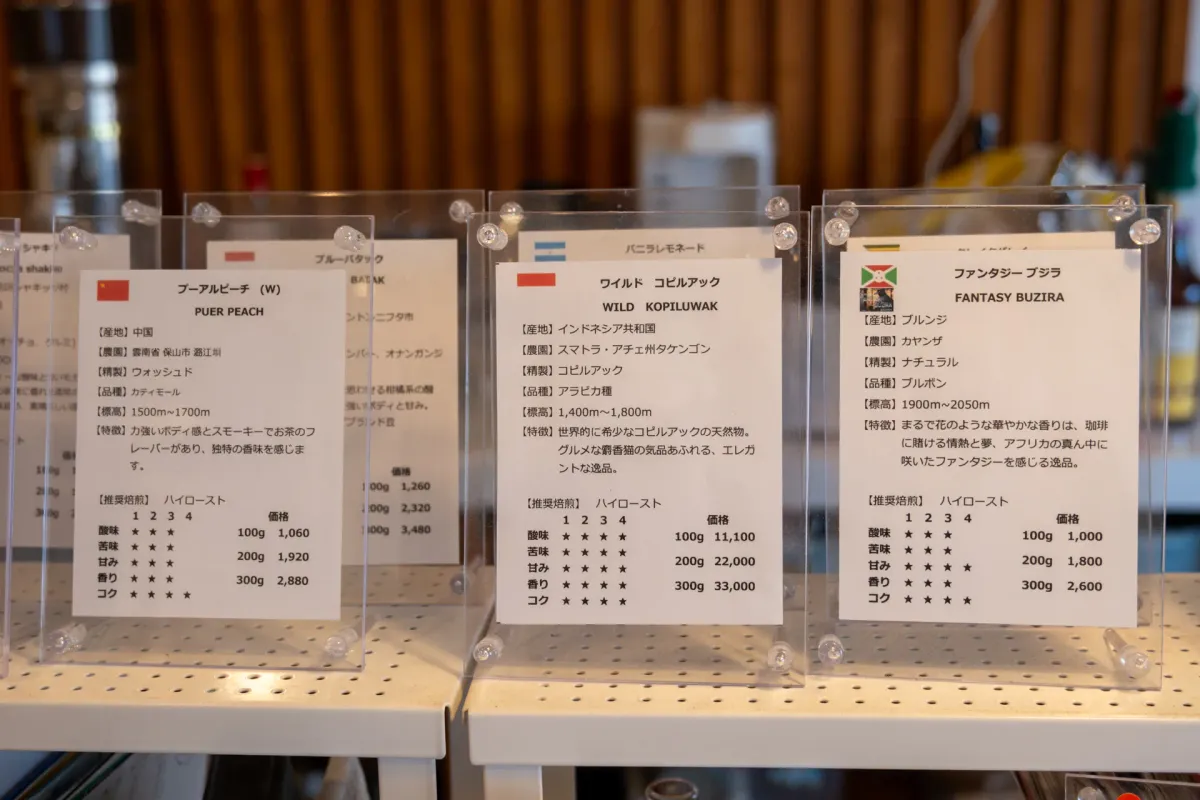
Over the past year I’ve discovered the joys of pourover coffee, and especially the fun in trying out new coffee beans from different specialty roasters in Japan. Luckily my husband drinks coffee too, so with two cups a day we’ve got a pretty good consumption rate of coffee beans going. Lately I’ve been trying to visit a new coffee store each time I need more beans, which has meant we have been able to try more and more of the coffee beans on offer in Tokyo.
So far I’ve bought coffee beans from around 15 different stores here in Tokyo, so I feel it was about time for me to write this page. Of course this is not yet an exhaustive list - I have so many more roasters I want to check out, and will be sure to update this page when I find some more good ones.
Buying coffee beans can be such a personal preference thing, so if you’re trying to figure out whether my tastes will match with yours - these days I love light roasted beans, although I sometimes might go with a medium roast. My favourite variety lately has been the Pink Bourbon, I never buy Geisha (they are too expensive for me), and recently I’m starting to grow a fondness for Ethiopia and Kenya beans as well.
If you want to jump ahead to my coffee store recommendations, here’s a quick list:


Understanding coffee roasting levels in Japan
I have a separate post on Japanese coffee roast levels but as a quick primer in Japan, beans are generally split into three roast levels.
- 浅煎り (“asa-iri” or light)
- 中煎り (“chuu-iri” or medium)
- 深煎り (“fuka-iri” or dark)
What initially tripped me up here though is that there can be quite a big variation for what is considered to be a “asa-iri” (light roast) bean between stores. Traditional Japanese roasters tend to only roast in a medium to dark range, and then call their lightest roasted bean their “asa-iri”. Other specialty coffee stores properly do a light roast, which they would also call their “asa-iri”. It seems light roasts are also known as a “nordic roasting style” which I have seen referred to on some websites.
You can kind of tell from the vibe of the store (is it modern and trendy) whether it’s going to be an actual light roast or not, but the other best way to tell is to buy a cup of their coffee first before actually buying a bean.
What to expect: prices and packaging
As a general price range for 100g of coffee beans:
- 200 yen: the absolutely cheapest bottom-of-the-barrel coffee bean at discount supermarkets
- 500 - 600 yen: a cheap blend bean
- 700 - 800 yen: heading into single origin territory, for cheaper medium and dark roasts
- 1000 - 1200 yen: some more premium coffee stores will sell blend beans in this price range
- 1600 - 1800 yen: premium single origin light and medium roasts. At fancier stores the cheapest bean starts around here
- 2000 - 4000 yen: fancy light roasts
- 10,000+ yen: crazy fancy light roasts
Personally speaking, I started off buying my coffee beans in the 700 - 800 yen territory, but more recently as my tastes have gotten bougier, I would feel comfortable paying up to 1500 yen for 100g (coffee is indeed a dangerous hobby). 2000 yen is probably the highest price I would feel comfortable paying, if I was really curious about the beans.

I make my coffee with 13g of beans at a time, so a 100g bag nets me about 7.5 cups of coffee - doing the math on that I’m paying 200 - 250 yen per cup I make at home.
Generally when it comes to coffee bean packaging and ordering, there’s two options in Japan:
- Pre-packaged beans available on display. These will generally have a roast date stamped somewhere on them. You can buy a bag at a time, usually 100g.
- The store displays all their beans in jars, where you can order in 100g increments at the counter. Sometimes you will be given a properly sealed bag to take them home with you, sometimes not (in which case it may be handy to have a bean container if you are not planning on drinking them for a while).
Some stores might have a stamp card, or occasionally a “buy a bag and get a free cup of coffee” type of deal, so it may be a tactical choice to buy your beans earlier in the day so you can take advantage of that.
You can get a bit of a discount if you order 200g in one go, but usually I like to buy 2 bags of 100g beans just for the variety. Usually the shop staff will also ask if you want the beans as-is, or they can be ground up for you.
What sort of beans should you buy?
If you drink your coffee with milk, generally I would recommend going for a medium to dark roast. If you are a milk-and-sugar kind of person and are just here for the caffeine fix, I would definitely go straight for one of the cheaper options on this page.
If you are just venturing into the world of pourover coffee, I would also recommend starting with a medium or dark roast as I find the taste will be more familiar, and it’s an easy starting off point. Lighter roasts don’t always mix well with milk, anyway.
Over time, you can slowly reduce the amount of milk you put in your coffee and graduate to drinking it black (if you want to!)
The more you try different roasts and beans though, you’ll probably eventually find your way to light roasted pourover coffee. I’ll be honest I don’t get a delicious cup of coffee each time I make a cup, but that’s kind of the fun with this hobby - just fiddling with the different parameters (temperature, ratio of water to coffee beans) until you find what works best for that particular bean.
Kaldi Coffee Farm: the affordable chain
Sells a wide range of blends and medium to dark roasted “straight” beans, generally around 600 - 800 yen for 100g.
Kaldi is a popular grocery store chain in Japan that sells a variety of coffee beans, plus a lot of imported snacks and food. It’s not necessarily where you’d go for your daily grocery shop - but nice if you want to pick up something a little different from what you’d usually eat. It might be where your average Japanese person buys some coffee beans (as one data point, my Japanese aunt buys coffee from here) and I’d rank it as a tier above the bean selection you’d get at a regular grocery store.
There’s plenty of Kaldi stores, so I would recommend finding the closest one to you. The largest store is the one in the Sakura Stage building near Shibuya station, which I’ll have to check out sometime.
They also have an online website where you can check out their full selection of beans. Their cheapest bean is their Mild Kaldi blend (medium roast) which is 1166 yen for 200g. Their cheapest “straight” bean is from Brazil at 1382 yen for 200g. I think technically this is not single origin, as the label only gets as specific as being “from Brazil” so you don’t really know the bean variety or farm it came from, which I think is to be expected at this price point.
Generally you’ll see prices around the 1500 yen mark in store, but they do also sell a Panama Geisha bean as an online exclusive for 6458 yen for 200g. Although they have a filter on their website for light roasts (浅煎り) it seems they don’t have any in stock at the moment so you can only get medium or dark roasts.
Yanaka Coffee: customise your beans
Sells single origin beans at a medium to dark roast, 1000 - 2500 yen for 100g.
So if you might turn your nose up at Kaldi, the next tier up on coffee roaster chains would have to be Yanaka Coffee. Their first store opened in the suburb of Yanaka (near Ueno) hence their name, but they have now spread to over 30 stores across Japan. You can check out the available beans on their website.

They provide a same-day roasting service, where you can choose beans and have them roasted (they will be done in about 15 - 30 minutes). Otherwise, they will have a small selection of already-roasted beans so you can grab and go. They also sell takeaway coffee available for a select bean each day (600 yen for a cup).
Ammonite Coffee Market: reasonable prices, reliable coffee
Sells single origin and blend beans at a medium to dark roast, around 1000 yen for 100g.
If you happen to be in the Hongo area, a new favourite roaster of mine is Ammonite Coffee Market. The taste of the coffee is great for their relatively affordable price. They also have small seating area if you would like to enjoy a cup of pourover (for only 600 yen) before you commit to a bean.

As well as their single origin beans, they also stock a number of blend beans, and also have a blend bean subscription service as well. If you’re looking for something that’s not too fancy and gets the job done for your daily coffee fix, I would definitely recommend Ammonite!
Honey Beans: a traditional Japanese roaster
Sells single origin beans at a medium to dark roast, around 800 - 900 yen for 100g.
If you’re looking to check out an independent coffee roaster, I’ve quite enjoyed my visits to Honey Beans in Sugamo. Sugamo is on the JR Yamanote line, but it’s a little bit more of a quiet station and not much of a tourist destination - it’s biggest claim to fame is its Jizo-dori or “Granny’s Harajuku”. Honey Sugamo’s website notes that they sell specialty coffee (i.e. coffee beans that are in the top 5% of coffee quality-wise).

This is more of a classic Japanese roaster, which means the roasts are all on the darker side - the lighest roast they sell is a medium-high roast (which they label as 浅煎り or “asa-iri”). What I like about this store is that they have put recommended pourover temperatures next to each of their beans. They have an online website where they do also have a small selection of their beans so you can get a sense of what they sell.
NorthStar: the widest variety
Sells single origin beans at medium to dark roasts, with a huge range from 1000 to 11,000 yen. You are able to sniff samples of the beans, which is always a plus.
NorthStar Beans in Shinagawa was a bit of an unexpected find - they purport to stock over 150 varieties of beans. Which is a pretty crazy amount and by far the hugest variety I have ever seen at any one store in Japan. If you had a specific bean in mind, this is probably the place to get it.

It can be a bit overwhelming to pick a bean with so many to choose from, but the employee (possibly the owner?) was more than willing to help us out and guided us through some of his recommendations which was a huge help. You can sniff samples of the beans as well, which can help in narrowing down your options.
It’s also a sit-down cafe, where you can order food and a cup of coffee, from a selection of 40 of their beans.
Leaves Coffee Roaster: the church of coffee
Sells single origin beans exclusively at a light roast, around 1600 - 9000 yen for 100g.
Leaves Coffee specialises in light roast pourover coffee, and the store itself has quite a unique vibe with lots of fans. All the other roasters I have listed on the page so far are more of a “roaster first, coffee shop second” but Leaves takes both its bean roasting and cafe vibe seriously.

If you are wanting to buy a cup of coffee, I would recommend lining up a little before store opening time as it is quite popular and you may have wait in a queue of 30 - 60 minutes otherwise. (If you are just buying beans, you can ask to skip the line).
They stock a smaller selection of beans - 12 in total - with quite a huge price range. Six are in the sub-4000 yen bracket, and then they increasingly go up to 9000 yen+ from there. I get the sense the store is more intentional with what they sell rather than going for a wider variety. You can choose most of them with your coffee order, so it might be worth getting a cup and figuring out what you like.
I really quite liked the beans I bought from here - I felt they were high quality and worth the price I paid. Not to mention they are also sold at the popular bean reseller Koffee Mameya, and I had a reader tell me they’ve spotted the beans being sold all the way in Ohio, USA - so I think they really do have a reputation for being a good roaster.
Onibus Coffee: the ethical and sustainable choice
Sells single origin beans exclusively at a light roast, around 1600 - 3000 yen for 100g.
Like Leaves Coffee, Onibus Coffee also specialises in light roasts pourovers, plus they do lattes as well. It’s a charming little cafe located near Nakameguro station with a view onto the train tracks, so you can enjoy a cup here as well as take some beans to-go.

When we visited they stocked a respectable 8 - 9 varieties of single origin beans, nearly all from different countries. Although the cheapest is about 1600 yen, the most expensive is only 3000 yen, so it feels like a rather comfortable and accessible range to choose from overall. One bean was a decaf as well.
The standout of Onibus is that, aside from having good beans, they also care about creating a more sustainable coffee industry. Of course maybe they are just tricking me with their marketing (they gave me a free pamphlet with a lot of info). But nonetheless I was left feeling rather impressed by the high bar this store has set.
Tsukikoya Coffee Roaster: an honourable mention
Sells a wide variety of single origin beans with different processing methods. Around 1500 - 2000 yen for 100g. Tasting samples available!
So this is technically a guide on coffee beans you can get in Tokyo, but I wanted to give a quick shoutout to Tsukikoya Coffee down in Yokohama. Yokohama is a city about 30mins by train south of Tokyo, and a nice place to spend a day out if you want to check out their Chinatown, the Cup Noodle Museum or just spend a day milling around by the waterfront (it’s quite a nice area). I spotted Tsukikoya down there on a recent visit and I was pleasantly surprised. I think it’s my favourite roaster I’ve visited so far - I feel like I’ve been trying to look for its equivalent in Tokyo.

Rather than always stocking a consistent set of beans, it seems they cycle through new varieties as they get a new batch in. You can see what they currently have in stock on their website here. When I visited they were selling my favourite Pink Bourbon bean for about 1800 yen for 100g, and they sell some beans using a “thermal shock” process which were rather tasty. I think for the uniqueness of the beans they have on sale, this is probably the most affordable place I have seen yet.
What’s nicer, they even let you taste samples of the different beans, which is always helpful when you are trying to figure out what to buy. They don’t have a sit-down cafe, but you can buy a cup to takeaway from any of the beans that are available for sale as well.
Blue Bottle Coffee: when you want a quick fix
Blend coffee at 1950 yen for 200g, with quick delivery.
Blue Bottle Coffee an upscale American coffee chain that has a number of stores in Japan. They do a pretty good cup of coffee, especially if you’re into more espresso-based drinks. They only sell two blend beans - called “Bold” and “Bright” for 1950 yen for 200g. But what’s convenient about these is that you can buy them on Amazon.co.jp for next-day delivery. A little expensive for a blend, but it’s good in a pinch if you are looking for some beans ASAP and you don’t have time to head to a roaster.

Peace Coffee: Coffee for a cause
Blend coffee, 1200 yen for 200g
And finally, one for the dog-lovers. Peace Wanko is a dog rescue organisation in Japan specifically aiming to stop the existence of kill shelters in prefectures with high kill-rates like Hiroshima. They have a sister company called Peace Coffee that helps provide assistance to coffee farmers in East Timor. You can buy the beans directly from the Peace Coffee website here, and they donate a portion of the proceeds towards Peace Wanko.

Japan also has a tax refund scheme called furusato nozei where you can send a portion of your income tax to other prefectures (as we are taxed per-prefecture and Tokyo receives a lot of tax money) and in return receive a gift from that prefecture. Last year I donated some of my tax money to Peace Wanko in Hiroshima, and in return they give me beans from Peace Coffee.
Peace Wanko is a bit of an unfortunate name for any Brits or Aussies out there, but “wanko” is actually a cute way of saying “dog” in Japanese. Anyway, it’s a win-win - the packaging is cute, and the beans were pretty decent. You and if you’re a tax-paying resident you can also check out their Furusato Nozei page here.

Hi, I'm Emma!
I'm a long-time lover of coffee - back in Sydney my go-to drink was always a soy cappucino. After I moved to Tokyo 4 years ago, I discovered the wonders of pour-over coffee and now I'm always on the lookout for new coffee beans to try. So far I've checked out 31 coffee shops and roasters here in Japan.
If you found this post useful, you can also show your support by buying me a coffee ☕
Comments
Waiting for the where to buy bulk mid to low tier coffee beans in tokyo
Ha! Well, Kaldi is on the cheaper end, but I hear Gyomu Super sells their beans for something in the range of 160 yen for 100g.
Leave a comment