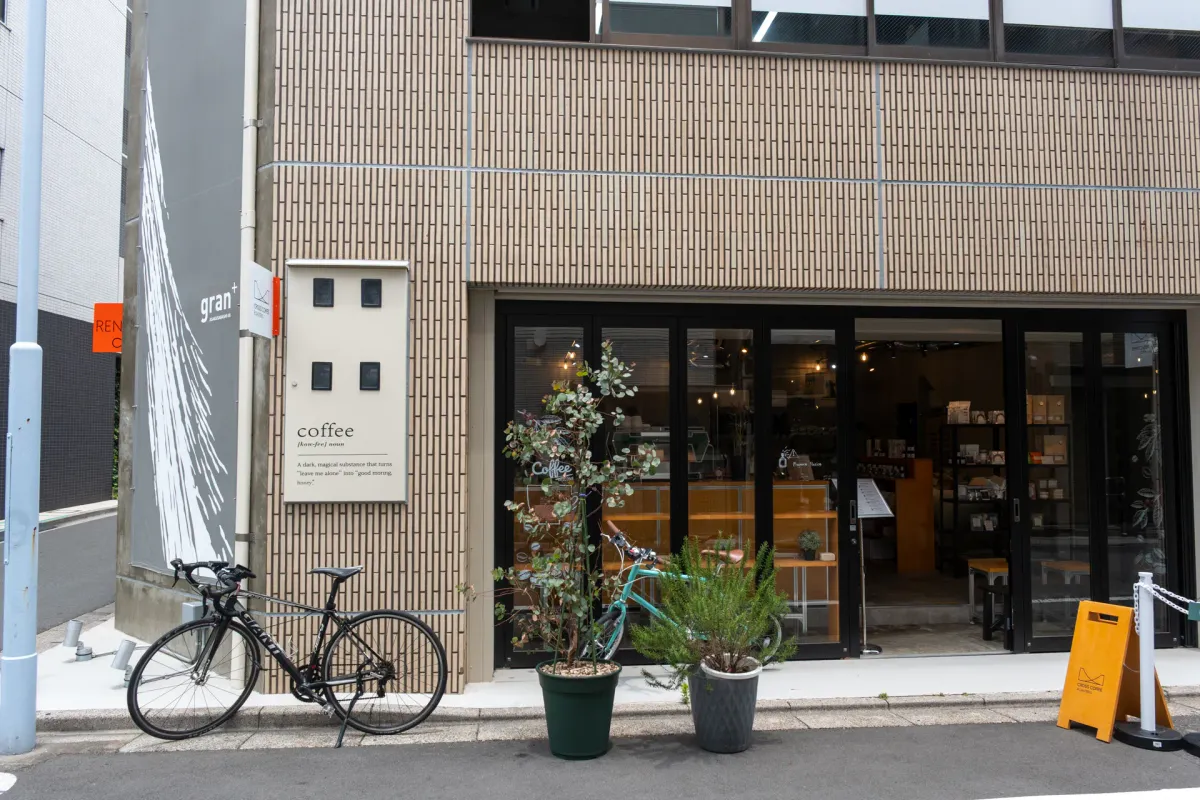
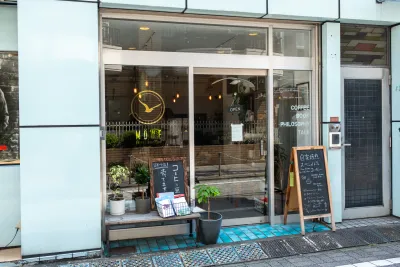
After wandering our way around the neighbourhoods of Kuramae, we found ourselves at CROSS COFFEE ROASTERS. I always like finding new coffee roasters, and this one had some great reviews on Google, so we decided to check it out. They serve pour-over coffee, plus espresso and milk-based coffees as well.
The entrance to the store had some rules laid out on a signboard - max stay of one hour, no laptops or children allowed. Which feels quite restrictive, but maybe they’ve had some issues in the past. Either way, something to keep in mind if you are looking to visit this place.

Otherwise, once we stepped in, we could check out all the bean options for pour-over.

The cups ranged from 950 yen to 1800 yen, which is not too bad of a range. The beans are all single origin and some are on the fancy side so the price feels justified. They also all have jars you can sniff from, which is great. There was also a “rum raisin” blend option which is the bean they use for their espresso coffees.

We decided to go with their cheapest Yunnan Sarchimor bean (950 yen).

We decided to go with this one because a) it was the cheapest but also b) we haven’t really had a delicious cup of Yunnan coffee before. Which I’ve always thought was unfortunate, considering my husband has Chinese background. It’s not like Japan or Australia (where I’m from) produces any coffee beans so really, I think it’s quite cool to come from country that produces, coffee, right?
As we were only sharing the one cup between us (since we were already pretty caffeinated from our visit to Leaves earlier in the day) and they had a “1 drink per person” rule, we got the cup to-go, which comes with a 50 yen surcharge.

As a nice touch, they also give you little tasting card with the coffee as well.

Checking out Cross Coffee’s selection of beans
So I did have my eye on buying some of their beans, but we chose to step outside for a bit and savour the coffee before deciding (it’s the worst if you buy beans and a coffee at the same time, and then you don’t like the taste of the coffee at all).
It tasted pretty decent, so back in we went.
The shop really has a lot of interesting-looking beans on offer. From this Rwanda yaki-imo (or “sweet potato”), 100g for 2100 yen.

To this Ethiopia Idido Jasmine (2800 yen for 100g).

This is the first time I’ve ever seen this in a coffee shop in Japan, but they use a method called “Jasmine Scenting”, which is originally a technique used in Chinese tea-making where Jasmine flowers are layered with tea leaves. In this case, they layer the flowers with the green coffee beans before eventually roasting them.

There’s a couple of other pricey beans available in the 1700 - 2500 yen for 60g range like a Kenya Cherry Sour Beer Black Honey (what a name) or a Colombia Andes White Floral Geisha.
Basically all of the beans had eye-catching names, like this Ethiopia Supreme Grade Zero (2800 yen for 100g).

Or this Kenya “Inter Stellar” (again, 2800 yen for 100g).

If we wanted to get the same Yunnan bean we had tried, it was similarly priced at 2800 yen.
We decided to fix our eyes on the more affordable options on the menu, which was an Ethiopia Twakok G1 (1900 yen for 100g).

Or the very cheapest, a Yunnan Tropical Ferment, at only 1200 yen for 100g.

If you’re a regular reader of my coffee blog, there’s probably no guessing on what one we ended up going with.
The vibe in this store was kind of awkward, if I’m being honest, and it gave kind of a bad first impression for us. But as we made our choice of the Yunnan, one of the staff members popped out from behind the counter, eager to mention to me that it’s quite rare in Japan to stock beans from Yunnan, and that it was specific choice from the owner, which made our impression improve a bit. As it turns out, the store has two owners - one from Shanghai, the other from Japan.
Yunnan Tropical Ferment beans: my verdict
After we took the bag of Yunnan beans home we tried them pretty immediately (the bag didn’t have a roasting date on it, so I assume it wasn’t super recent but they were kept fresh by the sealing). This was our third time trying a Yunnan bean. Previously we had also had one a similar one with anaerobic fermentation (a Pu’er Peach), but I think this may have been the lightest roast we tried. And wow it was so unique.

The tasting notes mention liqueur chocolate, and it was 100% there for sure. The bean itself had a distinctively sweet aroma, but when drinking it you had this strong kick. Usually I’ve found the strongest taste of a pour-over coffee to be either bitterness or sourness (not in a good way, usually when it’s a bad bean or if I mess something up).
But this bean had this strong alcoholic taste, and I’ve never quite tasted anything like it. I’m not going to say it was super delicious and smooth to drink, but the uniqueness factor of it really had me really enjoying the bean and I’m glad I got to try it. This was the best (most interesting) Yunnan bean I’ve tried for sure.
Cross Coffee’s recommended pour-over method
We got a little sheet of paper along with our beans that detailed their recommended pour-over method.

It’s meticulous enough to list the specific water you should use - Suntory mineral water (サントリー天然水). This brand of mineral water sources their water from the Southern Alps. Considering I had recently visited Mt Houou in the Southern Alps, and their mountain hut had a free-flowing source of mineral water, I totally should have brought some back down the mountain with me for this coffee.
We’ve never been extra enough to try using specific water though, so we stuck with what comes out of our tap.
Otherwise, the method involves:
- 13g of beans, 200g of water (1:15 ratio)
- A temperature between 90 - 93℃
- A 30s bloom (30g), then a spiral pour (90g), then a final pour in the centre (80g)
Which is basically near-identical to the method that Leaves Coffee recommends. I was curious whether there was some sort of famous method that both of these stores were inspired by, but a quick Google didn’t really bring up anything (I’d love it if anyone could let me know!)
Up until this point I had been using a 1:16 ratio with James Hoffman’s V60 Technique which involved doing 5 separate pours (all swirls) plus a swirl shake before and after to create a super-even bed of coffee.
I’m unsure on what the pros and cons are of doing this centre pour method versus doing all swirls, so I’ll have to read up on it. If I had to guess though, over-agitating the grounds via swirls is not necessarily a good thing, so maybe just doing one swirl and then pouring in the centre gives you more consistency.


Hi, I'm Emma!
I'm a long-time lover of coffee - back in Sydney my go-to drink was always a soy cappucino. After I moved to Tokyo 4 years ago, I discovered the wonders of pour-over coffee and now I'm always on the lookout for new coffee beans to try. So far I've checked out 31 coffee shops and roasters here in Japan.
If you found this post useful, you can also show your support by buying me a coffee ☕
Comments
Tokyo tap water is quite soft and therefore close to optimal for brewing coffee. Very lucky!
Brewing with that suggested mineral water would make the cup a bit more intense / acidic. I'd say worth trying once if you're curious :)
Wow that's great! Didn't know that about the water.
Leave a comment